
What Is a Stablecoin? A Beginner’s Guide (2026)
Picture this. You buy some crypto on Monday. By Friday it is worth 20% less. You did nothing wrong. The market just moved.
That is a stablecoin. And if you have ever wondered what is a stablecoin, really — not the textbook line, the actual thing — this guide is for you.
Short answer: a stablecoin is a cryptocurrency designed to stay at one steady price, usually one US dollar. It lives on a blockchain like any other crypto. But instead of swinging up and down, it is built to hold its peg.
Table of Contents
What Is a Stablecoin, in One Paragraph?
A stablecoin is a digital token that is pegged to something steady. Almost always the US dollar. One token is meant to equal one dollar. Not roughly. Not on a good day. By design.
It is still crypto. It moves on a blockchain. You hold it in a wallet, send it to another wallet, and trade it on exchanges. The difference is the goal. Bitcoin and Ethereum are built to be assets that can rise or fall. A stablecoin is built to be boring. Boring is the whole point.
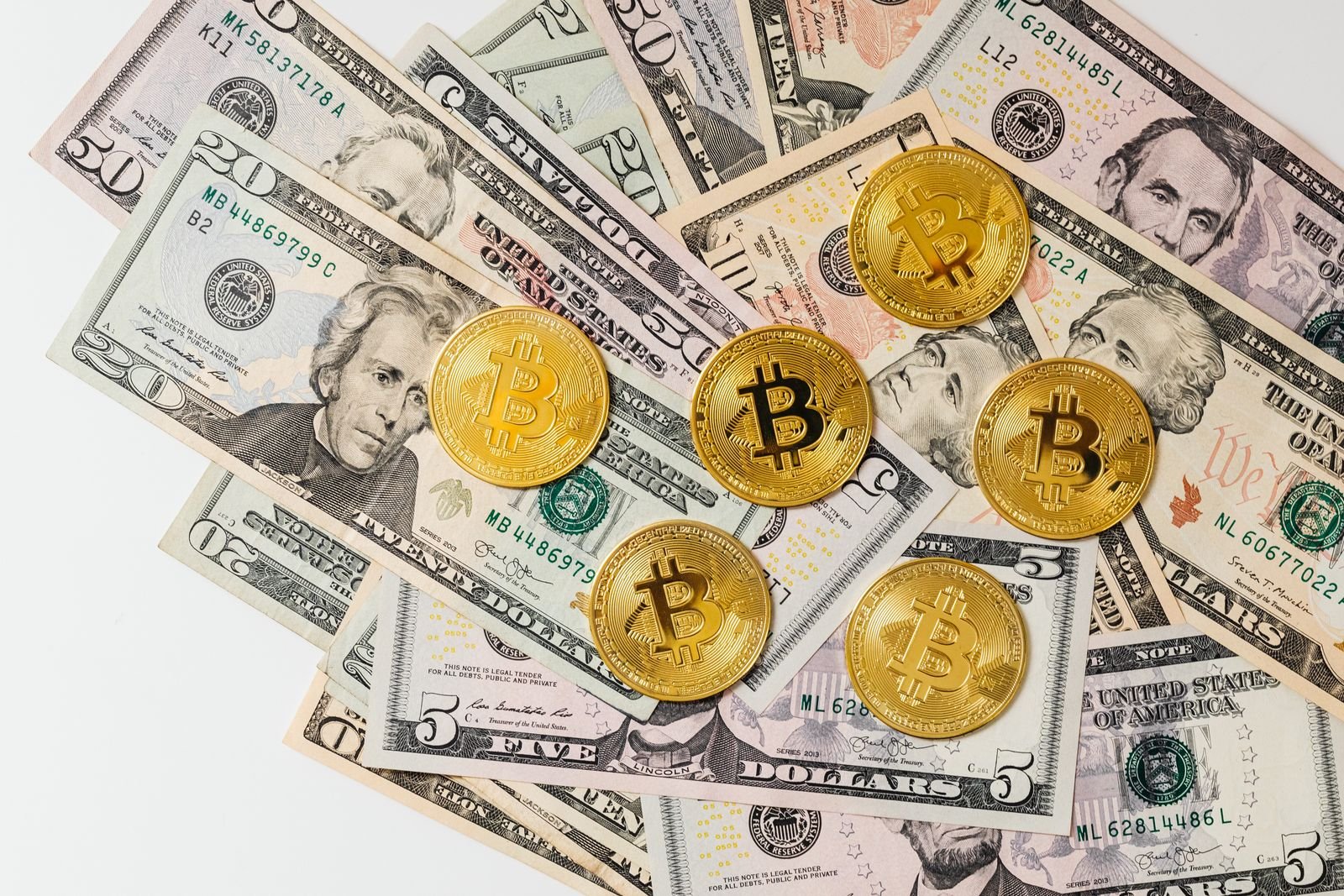
Think of it as a digital dollar. Not a dollar issued by a government. A dollar-shaped token, issued by a company, that travels on crypto rails. For the full technical picture, Wikipedia’s overview of stablecoins covers the different designs in more depth.
The Problem Stablecoins Solve
Crypto has one big usability problem. Volatility.
Say you run a small online shop and you accept crypto. A customer pays you on Monday. The price drops 15% by Wednesday. You sold the same product. You just earned less. That is not a payment system. That is a lottery ticket.
Or you send money to family abroad. You buy crypto, send it, they sell it — and if the price moves mid-transfer, the amount that arrives is a surprise. Nobody wants a surprise with rent money.
Stablecoins fix exactly this. They keep the useful parts of crypto — fast transfers, no bank hours, works across borders — and strip out the wild price swings. That is why traders park money in them between trades, why freelancers get paid in them, and why people in countries with shaky local currencies hold them.
How a Stablecoin Holds Its Peg
So how does a token actually stay at one dollar? It is not magic. It is a promise, backed by something real.
Take the most common kind: a fiat-backed stablecoin. Someone gives the issuer real dollars — say $1,000. The issuer creates 1,000 new tokens and hands them over. One token per dollar in. Those tokens then move around freely while the dollars sit in reserve, and anyone holding the tokens can hand them back for their dollars. The returned tokens are destroyed — burned, in crypto language.
And here is the clever bit. If the token ever trades below a dollar, traders buy it cheap and redeem it for a full dollar. That buying pushes the price back up. If it trades above a dollar, traders do the reverse and sell fresh tokens for more than a dollar. That selling pushes the price back down. The peg holds because the market is paid to push it back.
But — and this matters — the whole thing only works if the reserve is really there. If the issuer says “we hold a dollar for every token” and it is true, the system is sound. If it is not true, the peg is a story. Which is why reserves, audits and attestations come up every time serious people talk about stablecoins.
The Four Types of Stablecoins
Not every stablecoin works the same way. There are four main designs. The type tells you almost everything about how safe it is.
| Type | How it holds the peg | Best-known examples | The catch |
|---|---|---|---|
| Fiat-backed | Real dollars (or euros) held in reserve, one for one | USDT, USDC | You must trust the issuer and its reserves |
| Crypto-backed | Other crypto locked up as collateral, usually more than the tokens are worth | DAI (now USDS) | If the collateral crashes, the peg is under pressure |
| Commodity-backed | Backed by a physical asset such as gold | PAXG | Tracks gold, so it is only as steady as gold is |
| Algorithmic | No reserves — code and market incentives balance supply and demand | UST (failed in 2022) | If confidence breaks, there is nothing underneath |
Fiat-backed coins are the standard now. USDT and USDC dominate the market. Crypto-backed coins have a real role in DeFi. Commodity-backed coins are a niche. And algorithmic coins? After 2022, almost nobody trusts them.
USDT: The Biggest One
USDT is issued by a company called Tether. It launched in 2014, which makes it the oldest big stablecoin still running. And it is the largest stablecoin by market size — by a wide margin.
Tether takes in dollars, issues USDT, holds reserves, redeems on request. USDT runs on many blockchains at once — Ethereum, Tron, Solana and others — so almost every exchange lists it and almost every trading pair uses it.
But USDT has a history beginners should know. In 2021, the US Commodity Futures Trading Commission fined Tether $41 million for misleading statements about its reserves. Tether paid the fine and kept operating, and now publishes regular reserve reports.
Does that make USDT unsafe? That is not for this article to decide. What it means is this: USDT is the most used stablecoin in the world, and also the one with the most argued-about reserves. Both facts are true at the same time. For the practical steps, our guide to buying USDT in your country walks through the process.
USDC: The Transparent One
USDC is issued by Circle, a US fintech company. It launched in September 2018, originally as a joint project between Circle and Coinbase. Circle is now the sole issuer.
USDC works the same basic way as USDT — dollars in, tokens out, redeem on request. The difference is the pitch. Circle built its reputation on transparency and regulation. Its reserves sit in cash and short-term US government Treasury bills, and it publishes monthly attestations from an independent accounting firm. That transparency is why many businesses and institutions prefer USDC.
But USDC is not risk-free either. In March 2023 it briefly dropped to about $0.89 after Circle revealed it held funds at Silicon Valley Bank, which had just collapsed. The peg recovered within days. The lesson? Even the “safe” stablecoin can wobble when its bank has a bad week. A peg is a design goal, not a guarantee.
DAI and Crypto-Backed Coins
DAI is different: no company holds dollars for it. Instead, users lock up other crypto — usually Ethereum — in smart contracts, and the system issues DAI against it.
And here is the key detail: it is over-collateralized. To get $100 of DAI, you might need to lock up $150 or more of crypto — an extra cushion that absorbs price swings in the collateral.
DAI is run by a decentralized system, not a company. Nobody can freeze your DAI the way a company can freeze USDT or USDC. That is a real advantage for some people. The trade-off? It is more complex, and if crypto crashes hard and fast, even over-collateralization gets tested. One update worth knowing: DAI’s issuer, MakerDAO, rebranded to Sky in 2024, and DAI now also goes by the name USDS.
Algorithmic Stablecoins — and the UST Lesson
Algorithmic stablecoins tried to hold a peg with no reserves at all. Just code. Just incentives. In theory, elegant. In practice, it failed — spectacularly.
The famous case is UST, the stablecoin of the Terra blockchain. In May 2022 it fell from $1 to a few cents and never recovered. Billions of dollars vanished in days. People who held UST as “safe dollars” lost almost everything.
Why did it fail? Because the whole design depended on confidence. Once enough people started selling, the mechanism could not keep up. The more it fell, the more people sold. A death spiral, with no reserves to catch it.
The UST collapse changed the whole industry. Regulators started writing rules, exchanges got more careful, and the market moved firmly toward fiat-backed coins with real reserves. If anyone pitches you an algorithmic stablecoin today, remember May 2022. Ask what backs it. If the answer is “the algorithm”, walk away.
What Are Stablecoins Actually Used For?
Okay. So they exist. But who actually uses them, and for what? Here are the real jobs.
Trading without leaving crypto
This is the number one use. A trader sells Bitcoin after a good run and parks the money in USDT or USDC instead of cashing out to a bank — slow, fees, paperwork. It sits there, steady, ready to buy back in.
Sending money across borders
A worker sends money home. A bank wire takes days and costs a cut. A stablecoin transfer takes minutes and costs far less, and the family receives dollars, not a volatile coin.
Holding dollars where dollars are hard to get
In some countries, getting US dollars is difficult — capital controls, weak local currency, unstable banks. For people there, a dollar stablecoin is a way to hold dollars on a phone. No bank account needed. That is not speculation. That is survival finance.
DeFi and paying for things
In decentralized finance, stablecoins are the workhorse — lent, borrowed, and used as collateral. Our guide to diversifying a crypto portfolio explains why some investors keep a stablecoin slice: the calm corner of a wild portfolio. Some shops accept them directly too, and PayPal launched its own dollar stablecoin, PYUSD, in 2023.
A Worked Example: Sending $100 Home
Let us make this concrete. Meet Sara. She works in Dubai. Her mother lives in Pakistan. Every month, Sara sends $100 home.
The old way: a money transfer shop. Fee, say, $8. Exchange rate markup on top. Money arrives in one to three days. Her mother gets maybe $90 worth of rupees.
The stablecoin way: Sara buys 100 USDT, sends it to her mother’s wallet in minutes, and pays a network fee of a dollar or two. Her mother receives 100 USDT, worth about $100, and converts it to rupees at a local exchange or a peer-to-peer trader.
Is it free? No. Is it simpler? For Sara, yes — faster, cheaper, and the amount does not change in flight. But notice what she did right: a well-known stablecoin, a low-fee chain, a small test amount first, and a way to convert back to local money. The stablecoin is only half the job; the other half is the on-ramp and the off-ramp. New to all this? Start with our guide to choosing a crypto exchange first.
Stablecoins vs Bitcoin vs the Dollar
People mix these up. So here is the plain comparison.
| Stablecoin (USDT/USDC) | Bitcoin | US dollar (cash/bank) | |
|---|---|---|---|
| Price | Aims to stay at $1 | Moves up and down sharply | Stable, but loses value slowly to inflation |
| Who issues it | A private company (Tether, Circle) | No one — it is decentralized | The US government |
| Speed of transfer | Minutes, any time, any day | Minutes to an hour | Days for international wires; bank hours apply |
| Main job | Steady digital money | Store of value / investment | Everyday money |
| Can it be frozen? | Yes — the issuer can freeze tokens | No central party can freeze it | Yes — banks and governments can |
The takeaway: a stablecoin is not a better Bitcoin. It is a different tool — crypto speed, dollar steadiness. If you want the deeper story, read our beginner’s guide to Bitcoin and our beginner’s guide to Ethereum, the network most stablecoins run on.
Risks Worth Knowing Before You Touch One
Stablecoins feel safe. That feeling is exactly why the risks matter.
The peg can break
It happened to UST in 2022. It happened briefly to USDC in 2023. “Stable” means “designed to be stable”, not “guaranteed stable”. If you hold a stablecoin, you are trusting the design and the reserves behind it.
The issuer can freeze your coins
USDT and USDC are centralized. Tether and Circle can — and sometimes do — freeze tokens at specific addresses, usually when law enforcement asks. Bitcoin cannot be frozen this way. Stablecoins can.
The reserves might not be what you think
You are trusting a company’s word — and its auditors — that the dollars are really there. Tether’s $41 million CFTC fine in 2021 was about exactly this. The trust question never goes away with fiat-backed coins.
Platforms can fail, and scams love stablecoins
Stablecoins live on blockchains and move through wallets, exchanges and apps. Each of those can fail, get hacked, or freeze withdrawals. The coin can be fine while the platform holding it is not. Our guide to how crypto transactions work explains the mechanics — worth reading before you move any real money. And because stablecoins feel safe, scammers use them as bait: fake giveaways and fake platforms promising returns on USDT. “Send 100 USDT, get 200 back” is always a lie.
Regulation: The GENIUS Act
For years, US stablecoins lived in a grey area. No federal law covered them directly. That changed in July 2025, when the United States signed the GENIUS Act into law — the first federal framework written specifically for payment stablecoins.
In plain terms: it sets rules for who can issue a payment stablecoin in the US, requires one-to-one reserves in cash and short-term government securities, and requires regular disclosures. The detailed rules were still being finalized through 2026.
Why should a beginner care? Regulation makes the big issuers more accountable — your stablecoin is more likely to be backed by what it claims. None of this is legal advice, though. Rules change, so if you use stablecoins for business, check the current rules in your country rather than relying on a blog post — including this one.
Common Mistakes Beginners Make
Most stablecoin losses are not market crashes. They are avoidable beginner mistakes.
Sending on the wrong network. USDT exists on many blockchains. Send Ethereum-network USDT to a Tron-network address and the money can be lost. Always check the network matches.
Copy-pasting an address wrong. Crypto addresses are long strings of random characters. One wrong character, money gone — no bank to call, no undo button. Copy, paste, then check the first and last few characters before you hit send.
Trusting a random stablecoin. Not every token with “USD” in its name is safe — some are tiny, unbacked, or outright scams. Stick to the well-known ones until you know enough to judge the rest. A new coin promising high yields is not an opportunity. It is a warning.
Leaving everything on an exchange. Exchanges get hacked, freeze withdrawals, and go bankrupt. If you hold a meaningful amount, learn how wallets work — and understand where your money actually sits.
Treating “stable” as “risk-free”. A stablecoin is steadier than Bitcoin. It is not a bank account. There is no deposit insurance. No government guarantee. The peg is a design, not a promise from a central bank.
Frequently Asked Questions
What is a stablecoin in simple terms?
A stablecoin is a cryptocurrency built to stay at one steady price, usually one US dollar. It moves on a blockchain like Bitcoin, but it is designed to hold its value. Think of it as a digital dollar you can send anywhere, any time.
Is USDT the same as USDC?
Same idea, different companies. USDT is issued by Tether and is the largest stablecoin. USDC is issued by Circle and is known for transparency and monthly reserve attestations. Both aim to stay at $1 — neither is “the safe one”, they just carry different risks.
Can a stablecoin lose its peg?
Yes. UST lost its peg completely in May 2022 and never came back. USDC briefly dropped to about $0.89 in March 2023 before recovering. A peg is a design goal backed by reserves, not a guarantee.
Are stablecoins safe to hold?
Safer than a volatile coin, riskier than cash in a regulated bank. The main risks are the reserves, a depeg, frozen tokens, and scams. Use well-known coins, keep amounts sensible, and never treat a stablecoin as a bank account.
How do I buy a stablecoin?
The usual route is a crypto exchange: create an account, deposit local currency or another crypto, and buy USDT or USDC. Our USDT buying guide walks through the process, and our exchange guide helps you pick a platform first.
Do stablecoins pay interest?
Stablecoins themselves pay nothing. Some platforms offer yield for lending your stablecoins, but that means lending your coins to someone else — extra risk. And under the US GENIUS Act, regulated issuers may not pass yield to holders. If a platform promises high returns, ask what the risk is. There is always one.
What is the difference between a stablecoin and a CBDC?
A stablecoin is issued by a private company. A CBDC — a central bank digital currency — is issued by a country’s central bank. Government money in digital form versus private money in digital form. They look similar on a phone screen. The issuer is the whole difference.
The Short Version
A stablecoin is crypto that tries to stay at one dollar. USDT and USDC are the big ones — both fiat-backed, both widely used. DAI does it with crypto collateral instead of dollars. Algorithmic coins tried pure code, and UST showed what happens when that fails.
They are useful — trading, remittances, holding dollars, DeFi — but not risk-free. Pegs can break, issuers can freeze coins, scammers love them. Use the well-known ones, check the network before you send, send a test amount first, and never put in more than you can afford to lose — yes, even in a “stable” coin.
That is the whole story. A digital dollar. Useful, not magic.
One thought on “What Is a Stablecoin? A Beginner’s Guide (2026)”